 ArtGuess.io
The Pulse of Latin America: From Mexican Murals to Peruvian Liberators
By Bruno, Founder of ArtGuess.io
• 6 min read
If you’ve been playing ArtGuess.io, you know that Latin American rounds are some of the most vibrant yet challenging levels in the game. The region doesn’t just offer a single style: it offers a kaleidoscope of indigenous heritage, revolutionary fervor, and haunting surrealism.
Today, we’re diving into six masterpieces from our database that span nearly two centuries and thousands of miles, from the high altitude of the Andes to the volcanic soil of Central America. Whether you're a fan of social realism or "naïve" townscapes, these works are essential for any ArtGuess pro to master.
The Mexican Giants: Rivera and Mérida
When people think of Latin American art, they often start in Mexico City, the epicenter of the 20th-century muralist movement.
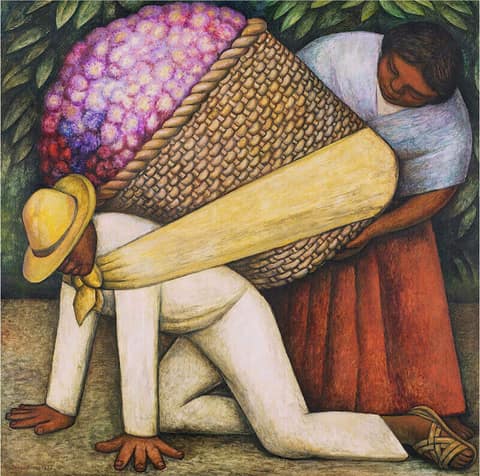
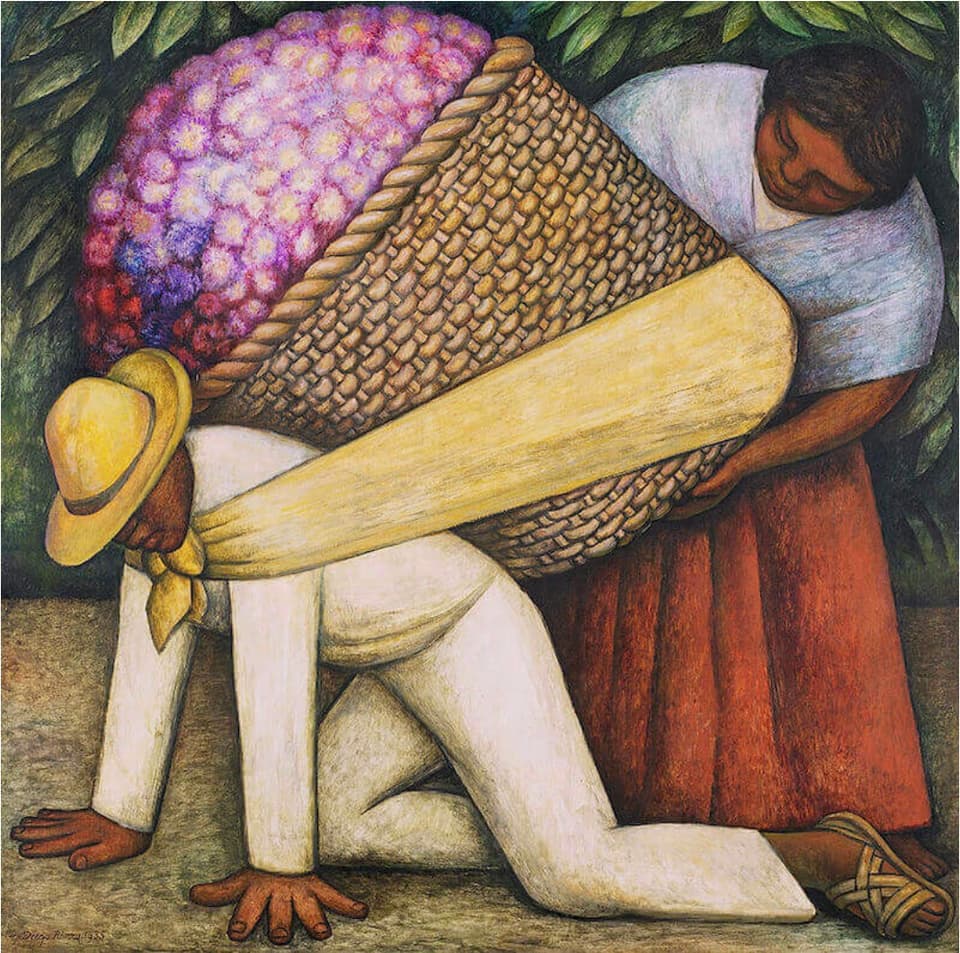
Diego Rivera’s The Flower Carrier (1935) is a masterclass in social commentary. Painted in San Ángel, this iconic work uses bold, rounded shapes to depict the physical burden of the working class. If you see bright purple lilies contrasted against a straining laborer, you are looking at Rivera’s tribute to the indigenous people of Mexico.
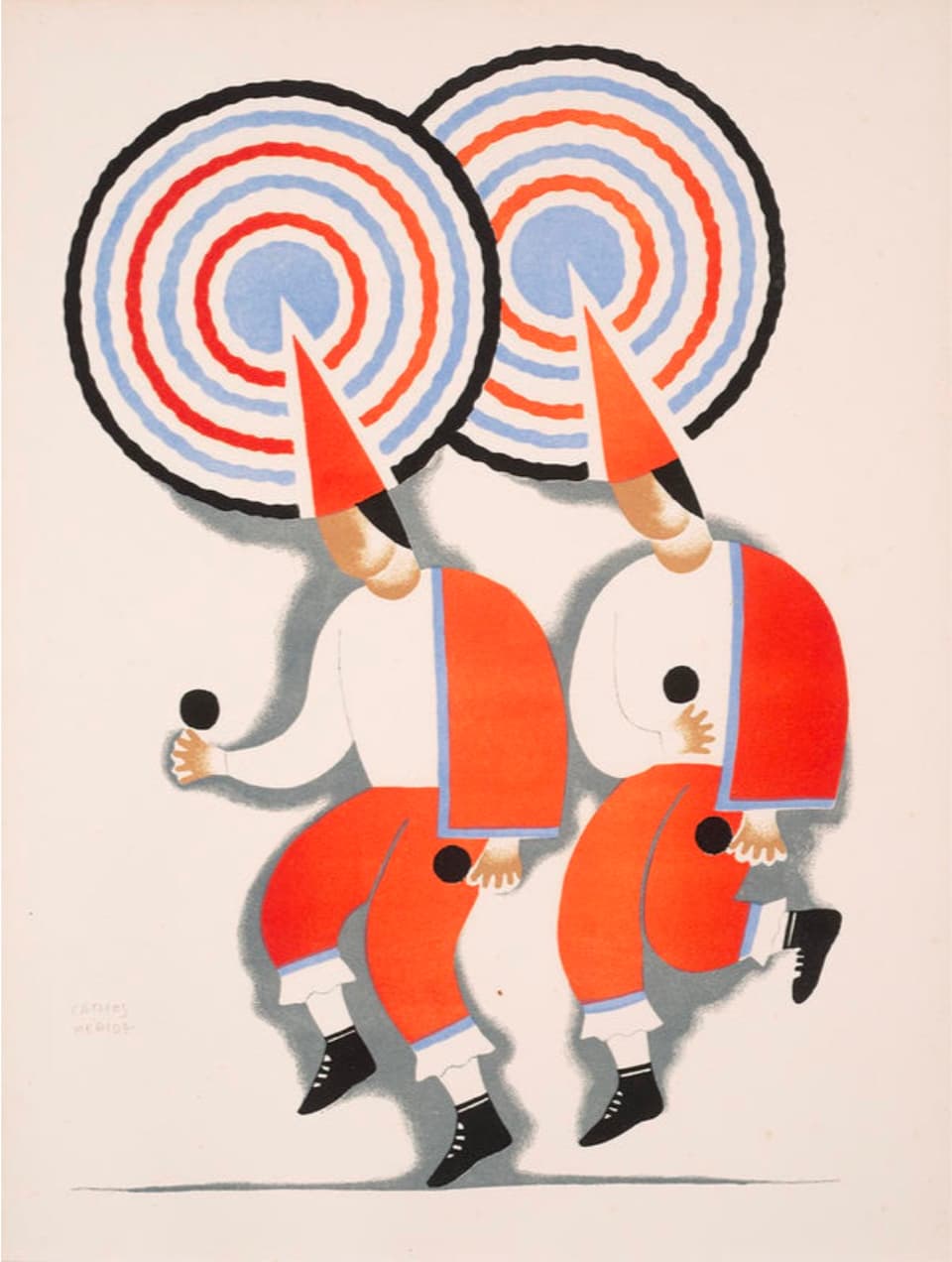
Contrast this with Carlos Mérida’s Dance of the Quetzals (1939). Though Mérida was Guatemalan-born, he became a fixture of the Mexico City scene. His work bridges the gap between European abstraction and Maya-Quiché motifs. Dance of the Quetzals isn’t just a painting; it’s a rhythmic, geometric exploration of folk tradition.
The Soul of Central America
Moving south into the heart of the Americas, the art becomes more intimate, often reflecting the specific "soul" of a single village or a haunting local legend.
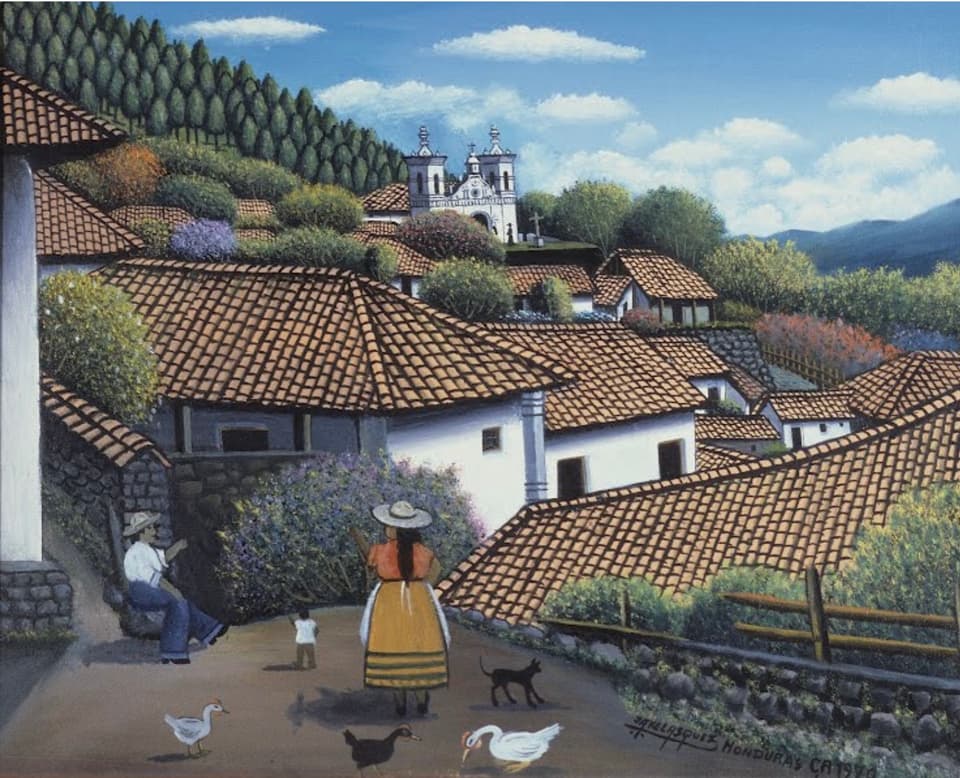
José Antonio Velásquez (Honduras): Often called the first "primitive" painter of the Americas, Velásquez’s San Antonio de Oriente (1970) is legendary. He painted his hometown over and over again with meticulous, almost obsessive detail—every tile on the roof, every person in the street.
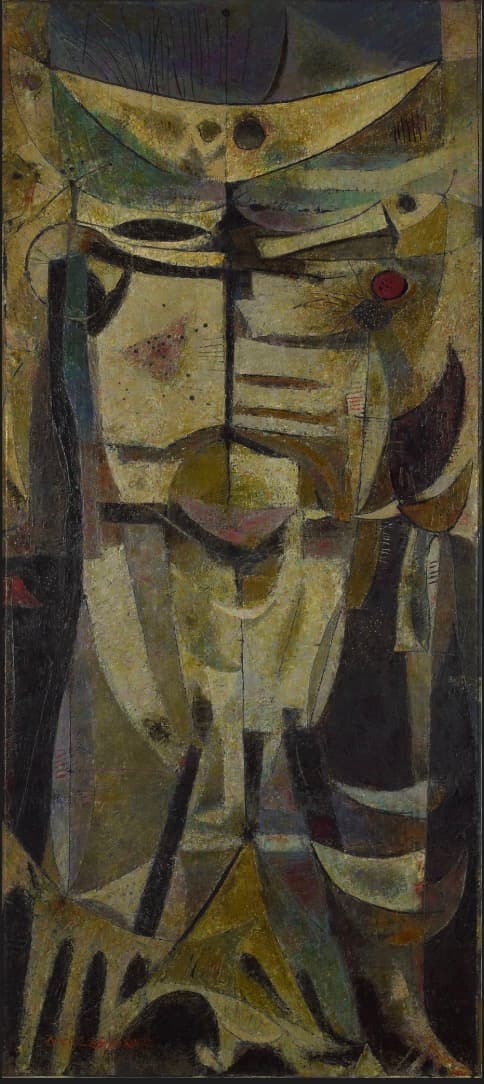
Armando Morales (Nicaragua): Spook Tree (1956) represents a shift toward the atmospheric. Morales is Nicaragua’s most international artist, known for a style that feels both solid and ethereal. His work in Managua often captures a sense of mystery or "magical realism" that is quintessentially Latin American.
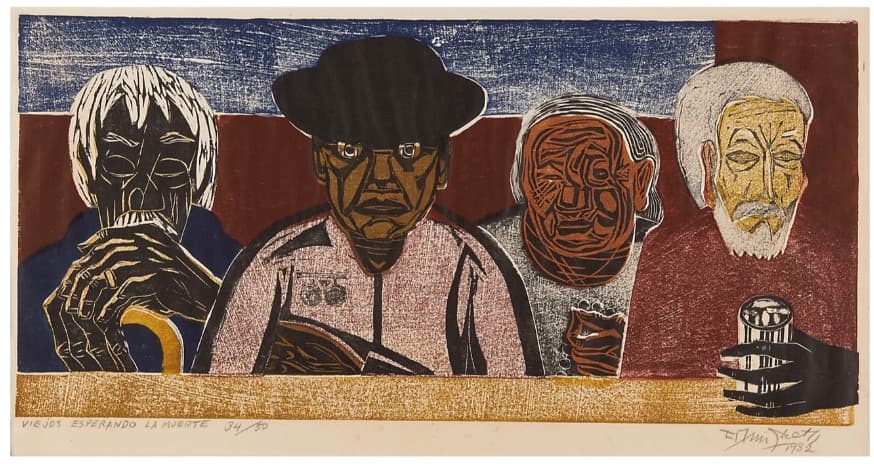
Francisco Amighetti (Costa Rica): In Viejos Esperando La Muerte (1982), Amighetti uses his signature style—influenced by woodcut prints—to reflect on the human condition. His work in San José often focuses on everyday life, philosophy, and the passing of time.
The Architect of Independence
Finally, we travel back to the early 19th century in Lima, Peru. Before the modernists and the muralists, there was José Gil de Castro.
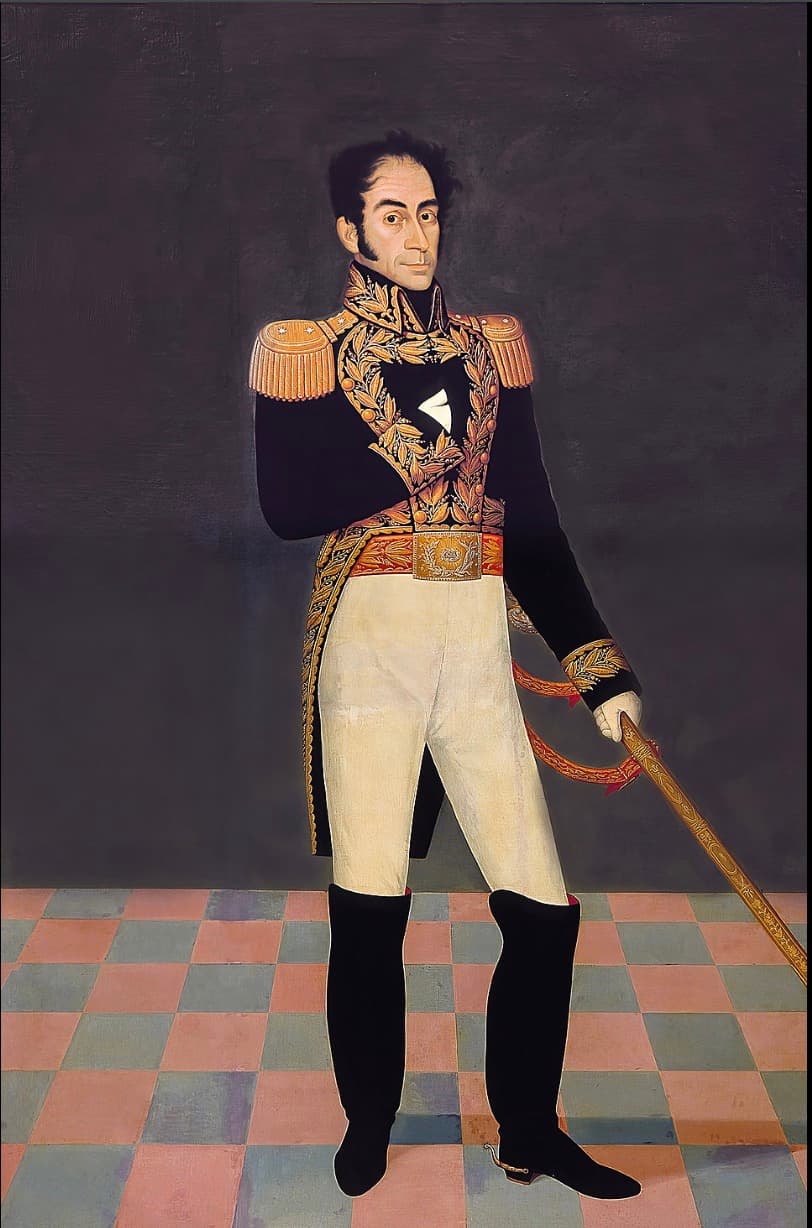
His Portrait of Simón Bolivar (1825) is the definitive image of the "Libertador." Gil de Castro was a self-taught genius who became the official painter of the independence movement. His style is formal and "stiff," but incredibly regal, capturing the transition from colonial rule to the birth of new nations.
How to Win at ArtGuess: The Latin American Strategy
Stuck on a Latin American round? Use these visual cues to pin your location with pinpoint accuracy:
- The "Tile" Rule (Honduras): If the painting looks like a highly detailed "toy town" with red-tiled roofs, white walls, and no shadows, guess San Antonio de Oriente, Honduras. That is the unmistakable mark of José Antonio Velásquez.
- Social Symbolism (Mexico City): Look for large, heavy figures and symbolic flora (like lilies). If the art feels "weighty" and monumental, it’s likely San Ángel or Mexico City.
- Geometric Folklore: If you see dancers or indigenous themes broken down into geometric shapes and vibrant, flat colors, think Carlos Mérida and point your map toward Mexico City.
- The Uniform Clue (Peru): If the subject is a military officer in a high-collared, gold-braided 19th-century uniform, check the date. If it’s around the 1820s, it’s almost certainly Lima, Peru, during the era of South American liberation.
- Dark Modernism (Nicaragua): If the landscape feels slightly surreal, dark, or features strange trees and shadows (like Morales), lean toward Managua.
Ready to test your knowledge of the Americas? Head over to ArtGuess.io and see if you can identify these masters in the wild!