 ArtGuess.io
Chasing the Ghost of Goya: A Journey Through 18th and 19th-Century Spain
By Bruno, Founder of ArtGuess.io
• 5 min read
Can you recognize a city by the way the light hits a tavern wall? In the world of ArtGuess, every brushstroke is a coordinate. But if you find yourself dropped into a scene of dusty Madrid streets, dramatic religious processions, or the chaotic fervor of a bullring, there is one name you should be looking for: Francisco Goya.
As the bridge between the Old Masters and the birth of Modernism, Goya didn’t just paint people; he painted the soul and the geography of Spain during one of its most tumultuous eras. Let’s look at how his work maps out the Spanish landscape and why his paintings are the ultimate "high-level" clues for any ArtGuess pro.
The Early Years: Tapestries and the Madrid Sun
In the late 1700s, Goya’s work was vibrant, outdoor-focused, and deeply rooted in the everyday life of Madrid. This was the era of "tapestry cartoons"—large-scale paintings meant to be woven into rugs for the royal palaces.
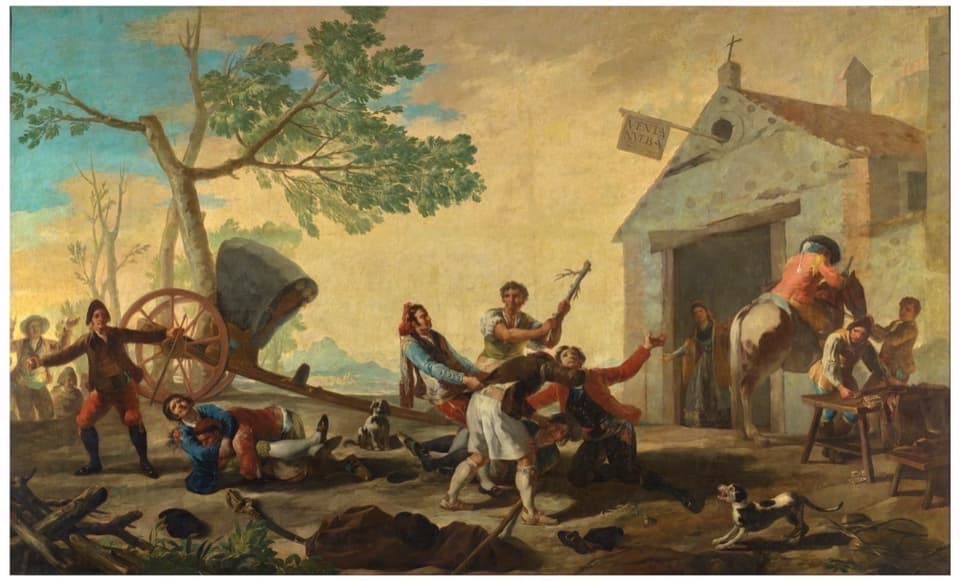
A Fight at the Venta Nueva (1777)
If you see a painting like "A Fight at the Venta Nueva" (1777), you are looking at the quintessential Madrid of the 18th century. The ventas (inns) on the outskirts of the city were hubs of social friction. Here, the geography is rural but the attitude is purely urban. When guessing this in-game, notice the warm, earthy tones and the architectural simplicity of the Spanish countryside.
Visual Cue:
Note: This painting captures the outskirts of Madrid, showing the rustic architecture common in late 18th-century Castile.
Crisis and Conflict: The War of Independence
The turn of the century brought Napoleon’s troops to Spain, and Goya’s brush turned from sunny leisure to visceral reality. This period provides some of the most challenging—and rewarding—locations in ArtGuess.
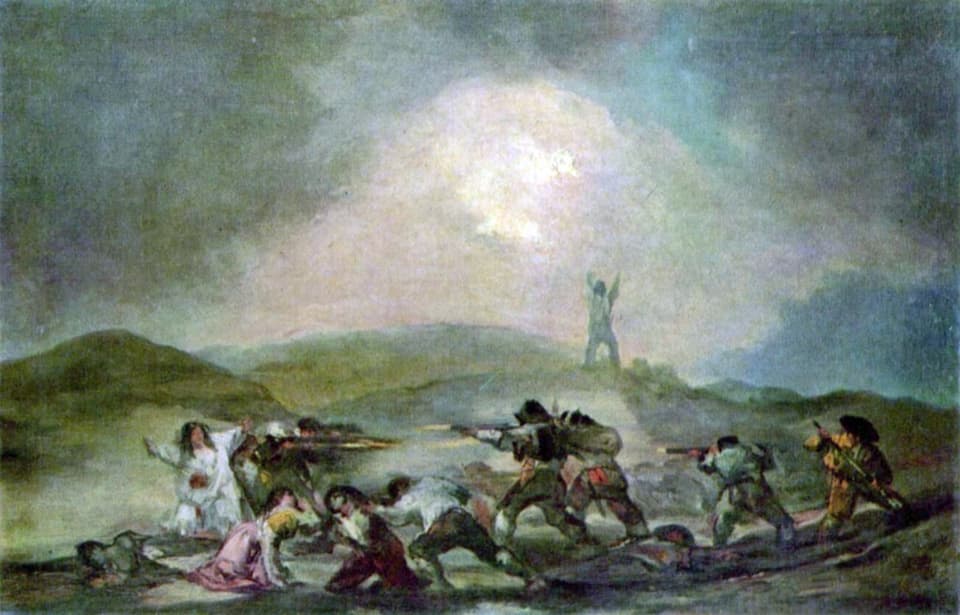
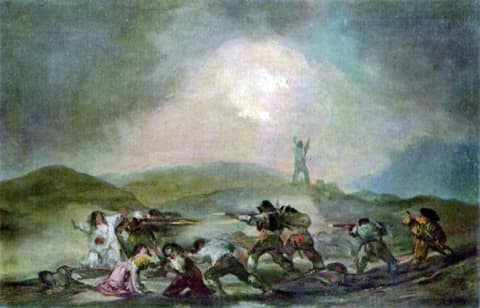
A Scene from the Spanish War of Independence (1810)
His work "A Scene from the Spanish War of Independence" (1810) is a masterclass in atmospheric geography. You aren't just looking at a battle; you're looking at the specific, jagged terrain of the Spanish interior. The dusty roads and stone structures are hallmarks of the Peninsular War era.
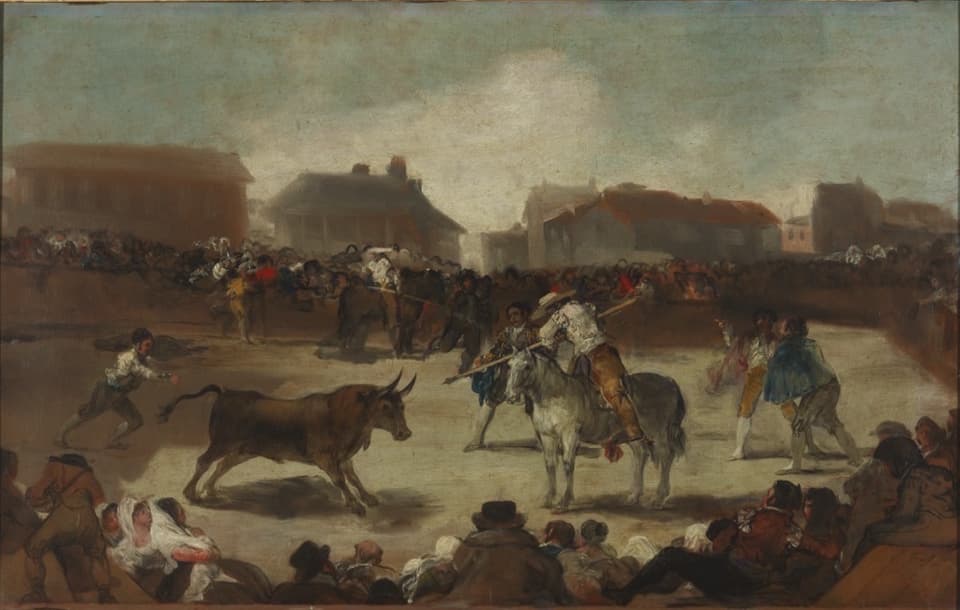
A Village Bullfight (1815)
Similarly, "A Village Bullfight" (1815) takes us away from the grand arenas of the capital and into the heart of rural Spain. If you see a makeshift ring in a dusty town square, you’re likely in a small village in the Madrid or Aragon regions.
The Darker Side: Processions and Pilgrimages
Goya was fascinated by the rituals of the Spanish people, from the devout to the macabre. For players, these paintings offer distinct architectural and cultural markers:
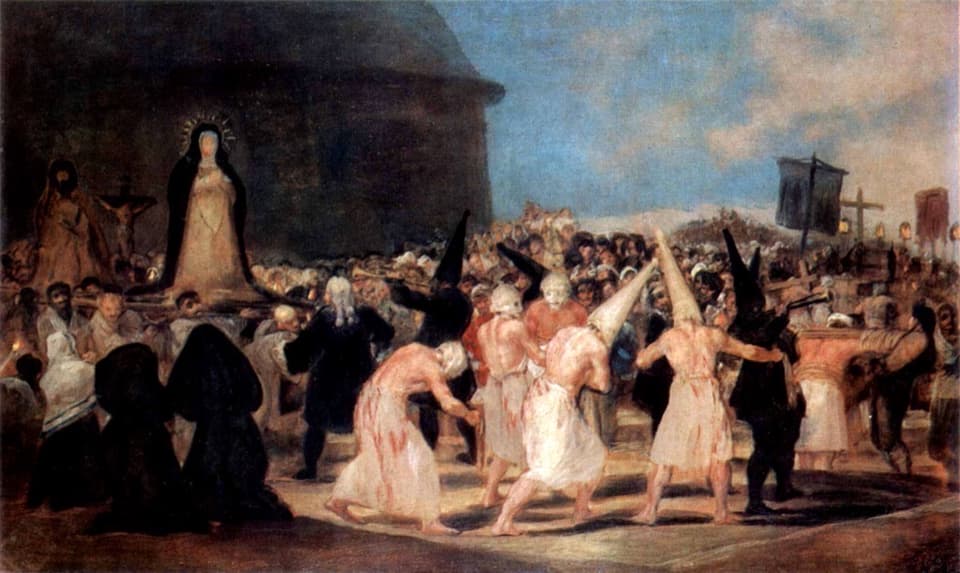
A Procession of Flagellants (1812)
- "A Procession of Flagellants" (1812): This painting screams "Central Spain." The heavy stone arches and the somber, religious atmosphere are deeply tied to the traditions of Madrid and surrounding Catholic hubs.
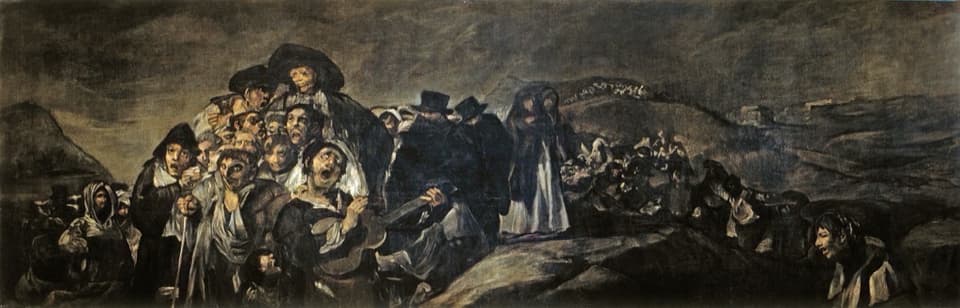
A Pilgrimage to San Isidro (1819)
- "A Pilgrimage to San Isidro" (1819): San Isidro is the patron saint of Madrid. If you see a mass of people moving toward a distant horizon, you are likely looking at the banks of the Manzanares River. This work was originally painted on the walls of Goya's own house, the Quinta del Sordo.
Visual Cue:
Look for the crowded, almost haunting figures—a sharp contrast to the bright tapestry cartoons of his youth.
How to "Geo-Guess" a Goya
If you encounter a Goya in your next round of artguess.io, ask yourself these three questions to narrow down the map:
- Is the light "Royal" or "Real"? Bright, saturated colors often point to his early commissions for the Royal Court in Madrid or suburban villas (1770s–1790s).
- Are there soldiers? If the scene is chaotic and violent, think of the Peninsular War locations—primarily Madrid and the surrounding sieges (1808–1814).
- Is it a "Black Painting"? If the palette is dark, muddy, and frightening, you are looking at his later life, specifically his home near the Manzanares River in Madrid.
Test Your Skills
Goya’s Spain was a place of beauty, blood, and belief. By learning to recognize the specific dusty hills of the Manzanares or the stone inns of the Spanish interior, you’re not just learning art history—you’re becoming an elite ArtGuess navigator.
Ready to see if you can spot the difference between a Madrid tavern and a Parisian cafe?
Play ArtGuess.io Now