 ArtGuess.io
Mapping the Interior: Frida Kahlo’s World of Pain and "Mexicanidad"
By Bruno, Founder of ArtGuess.io
• 5 min read
If Goya painted the soul of a nation, Frida Kahlo painted the map of her own internal anatomy. In the world of ArtGuess.io, landing on a Kahlo piece feels intimate, vibrant, and occasionally unsettling. She is without a doubt one of our favourite artists. But to pin her down on a map, you have to look past the iconic unibrow and into the specific geography of her life—from the lush gardens of Coyoacán to the cold industrial skylines of "Gringolandia."
Frida wasn’t just an artist; she was a chronicler of her own endurance. After a catastrophic bus accident in 1925 left her with lifelong pain, her bed became her studio and her mirror became her most frequent collaborator. Here is how to navigate the life and locations of the 20th century’s most fearless diarist.
The Roots: Coyoacán and the Mexican Identity
Most of your Kahlo guesses will lead you back to Mexico City, specifically to La Casa Azul (The Blue House) in Coyoacán. Frida’s style is heavily rooted in Mexicanidad—a post-revolutionary movement that rejected European elitism in favor of Mexico’s indigenous roots and folk art.
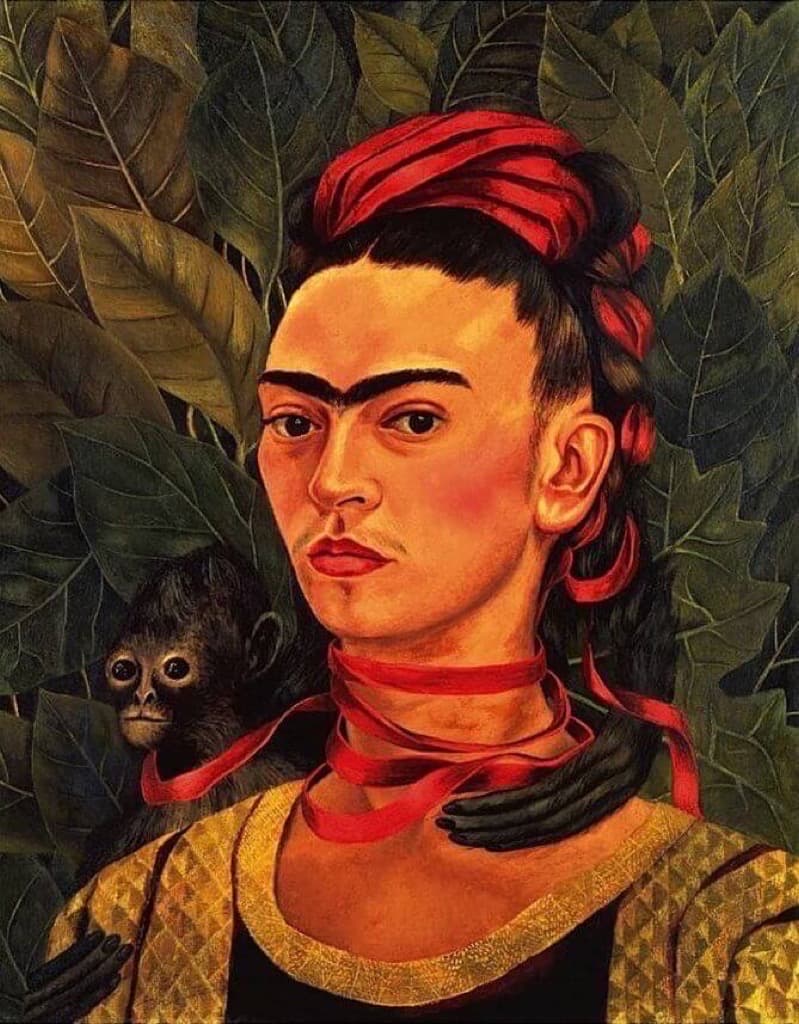
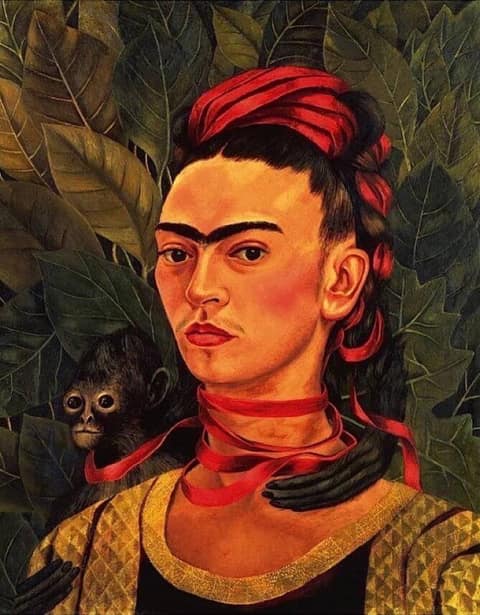
Self-Portrait with Monkey (1938)
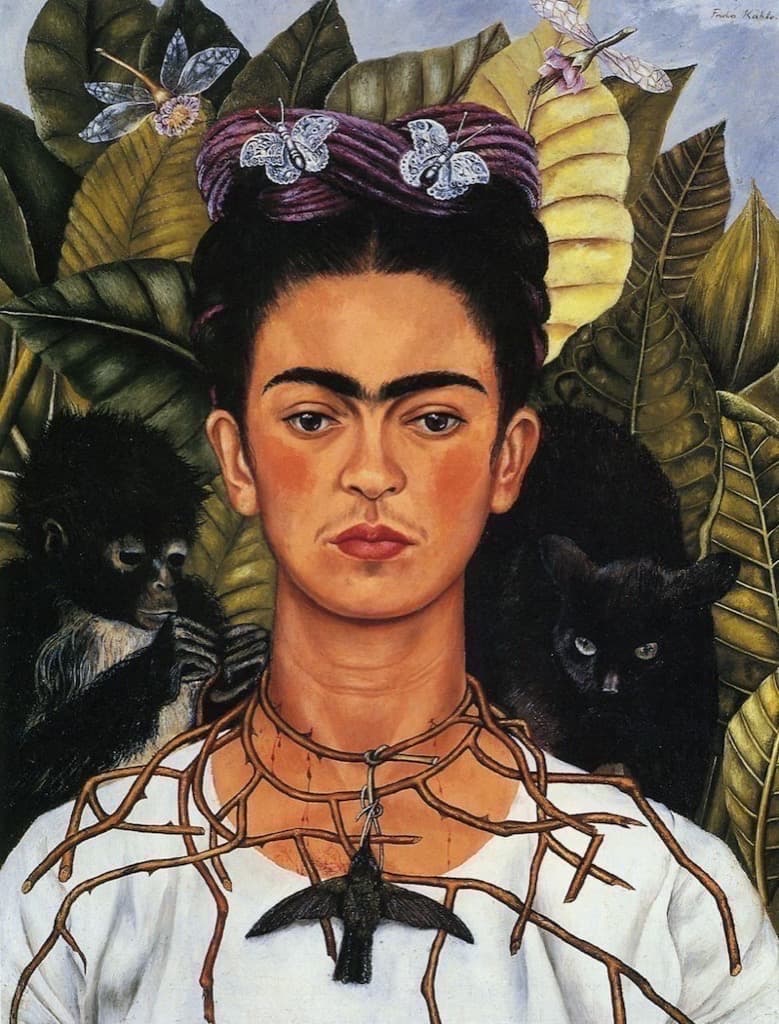
Self-Portrait with Thorn Necklace and Hummingbird (1940)
Self-Portrait with Monkey (1938) & Self-Portrait with Thorn Necklace (1940): In these works, the geography is biological. If you see lush, tropical leaves, hummingbirds, or spider monkeys (which she kept as pets), you are almost certainly in Mexico City. These animals weren't just cute additions; in Mexican mythology, the monkey is a symbol of lust, but for Frida, they were the protective children she could never have.
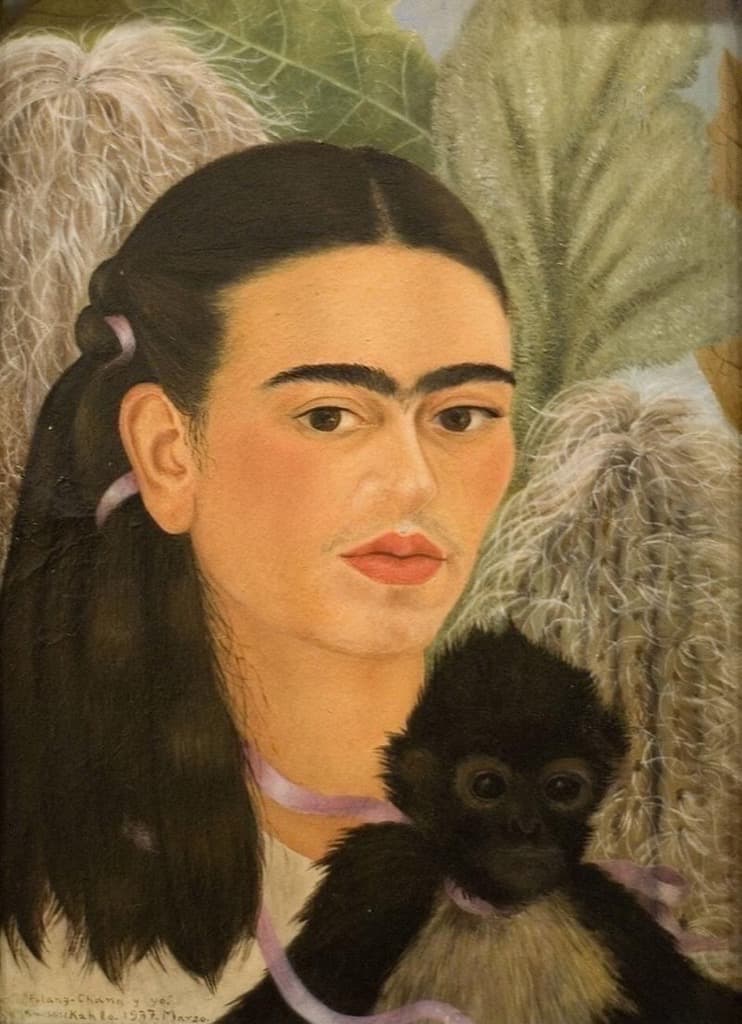
Fulang-Chang and I (1937)
Fulang-Chang and I (1937): Another Coyoacán classic. Notice the "naive" style—the flat perspective and bold colors are reminiscent of traditional Mexican retablos (votive paintings).
Visual Cue:
If the background is a wall of dense, green vegetation or traditional volcanic stone, set your pin on Mexico City.
The "Gringolandia" Detour: Detroit and New York
For an ArtGuess pro, the "traps" are Frida's American years. In the early 1930s, she followed her husband, muralist Diego Rivera, to the United States, a place she famously called "Gringolandia." The art she created here features a distinct style, covering a rich new array of subjects.
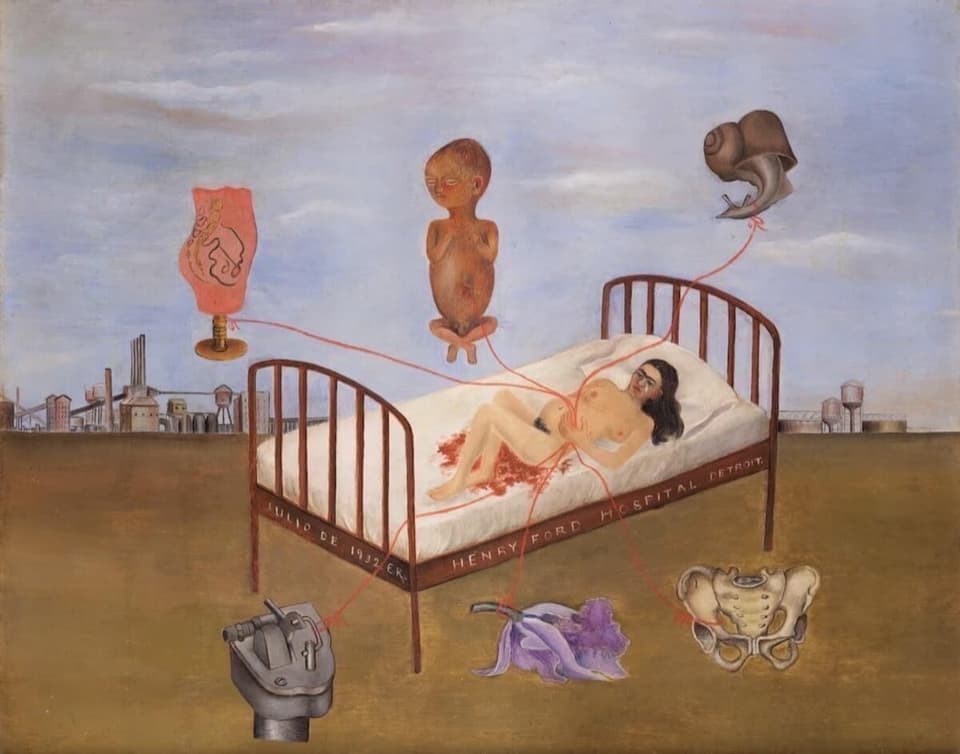
Henry Ford Hospital (1932)
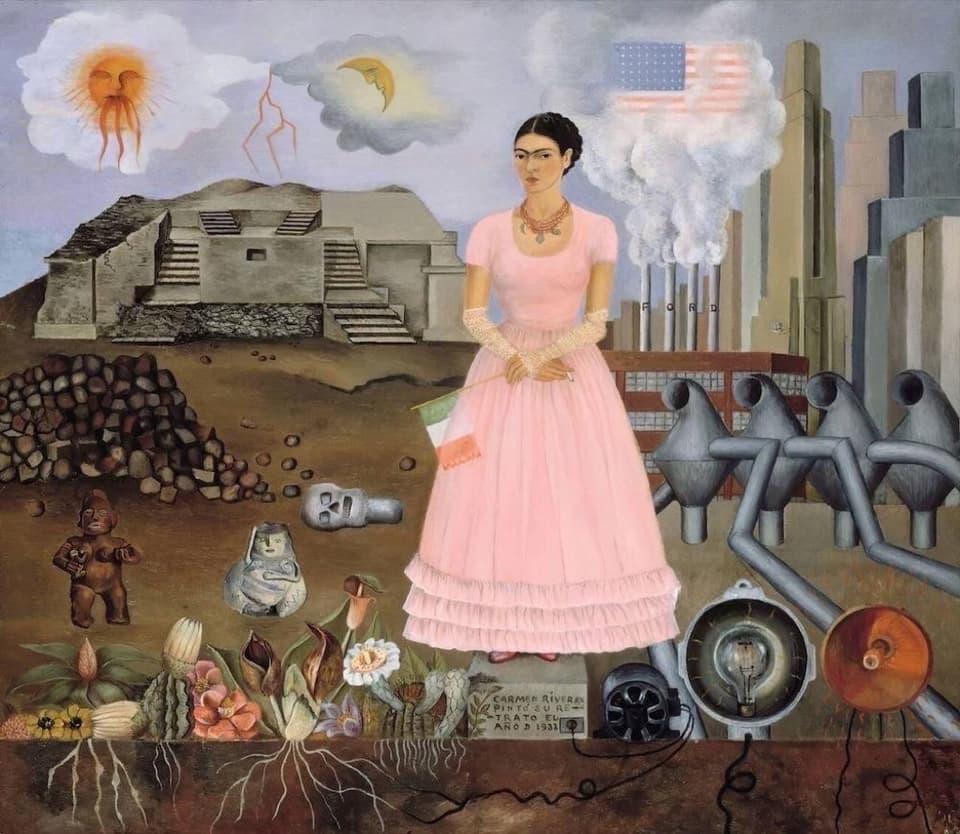
Self Portrait Along the Border Line (1932)
Henry Ford Hospital (1932) & Self Portrait Along the Border Line (1932): These were painted in Detroit. Unlike her lush Mexican portraits, these are cold and industrial. Henry Ford Hospital captures her miscarriage with a brutal, surrealist honesty. If you see industrial pipes, steam engines, or the stark skyline of a 1930s Ford factory in the background, you aren't in Mexico, you're in Michigan.
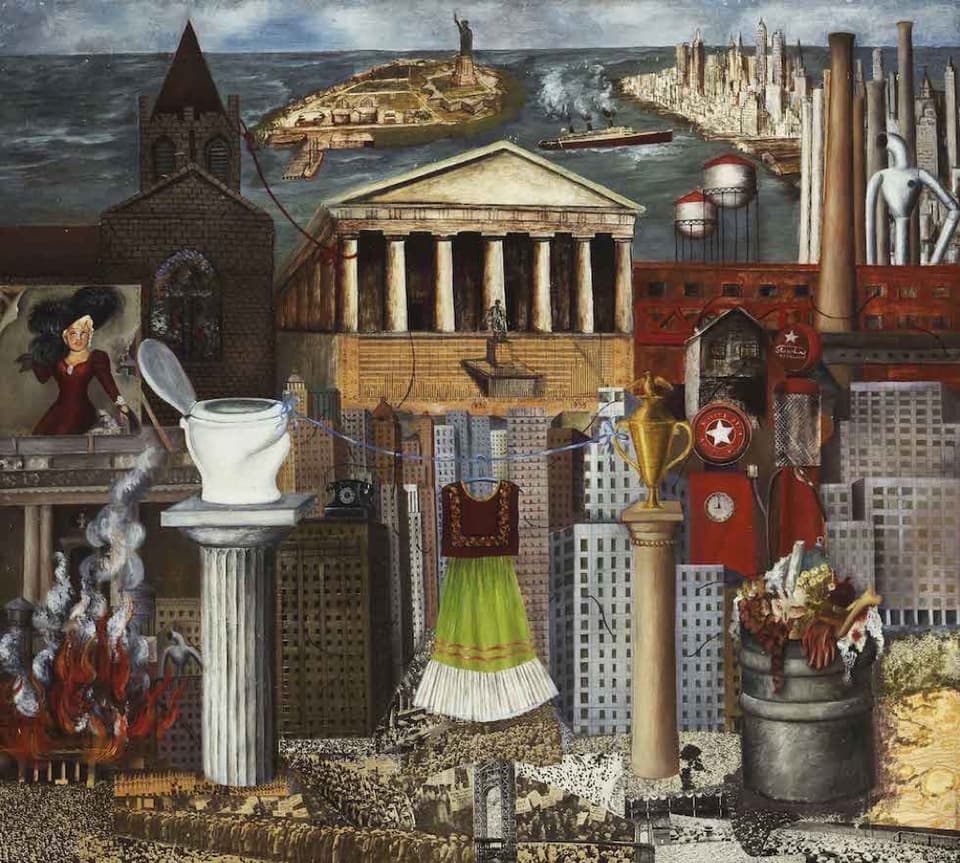
My Dress Hangs There (1933)
My Dress Hangs There (1933): This is a rare Kahlo work where she isn't the central figure. Instead, her Tehuana dress hangs amidst the chaos of New York City, surrounded by skyscrapers and symbols of capitalism. It’s a protest piece about her longing for home.
The Surrealist Label and the "Broken" Body
Frida famously said, "I never painted dreams. I painted my own reality." This reality was often fractured, leading to some of her most haunting works that provide specific anatomical and emotional clues.
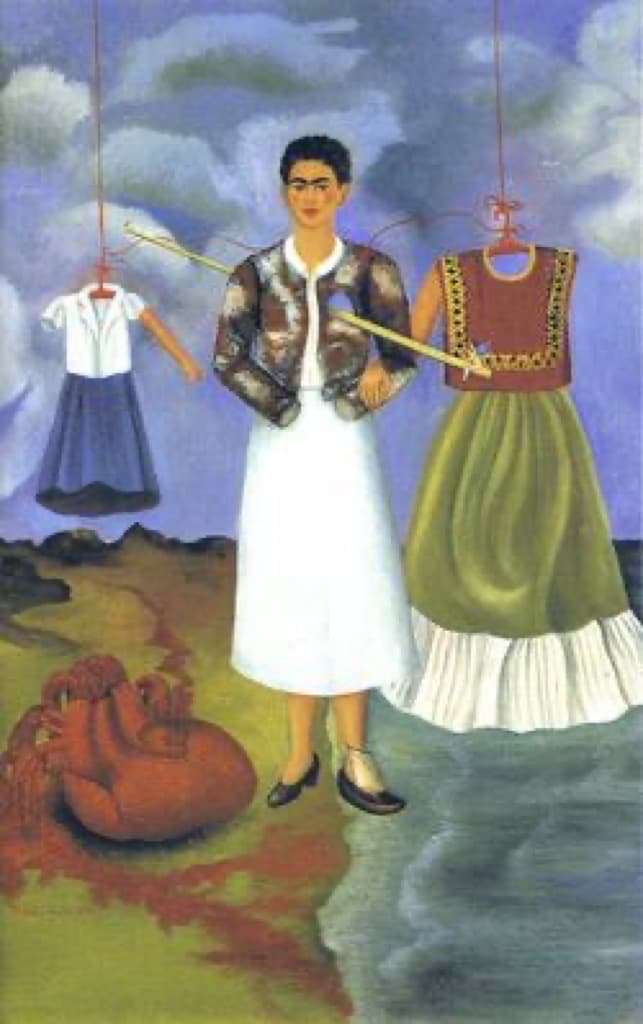
Memory, the Heart (1937)
Memory, the Heart (1937): Painted during a period of heartbreak over Diego’s affair with her sister. If you see a giant, bleeding heart on a beach and a lack of a face, look for the year 1937. The style is more "Surrealist" here, though she still anchors it in Mexican symbols.
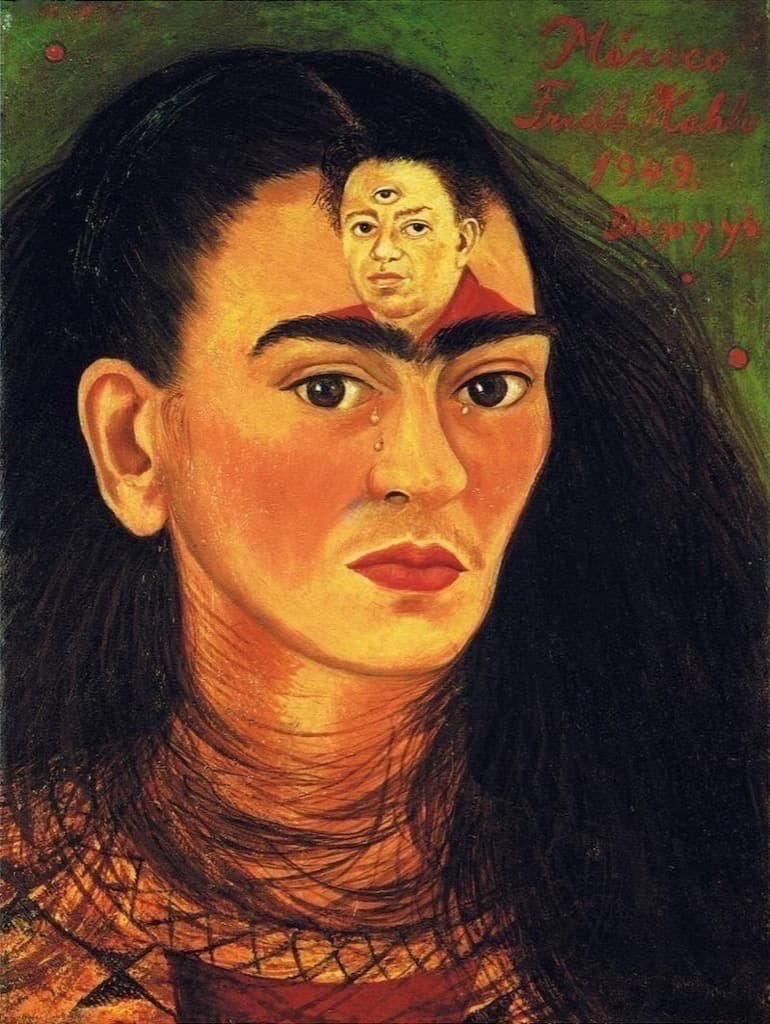
Diego and I (1949)
Diego and I (1949): A later work from Mexico City. By this point, her brushwork became more obsessive and detailed. The "third eye" featuring Diego’s face is a dead giveaway of their complicated, late-stage relationship.
The Final Years: Politics and Pain
In the 1950s, Frida’s health declined rapidly, and her work shifted. She became increasingly political, seeking solace in her Marxist beliefs as her body failed her.
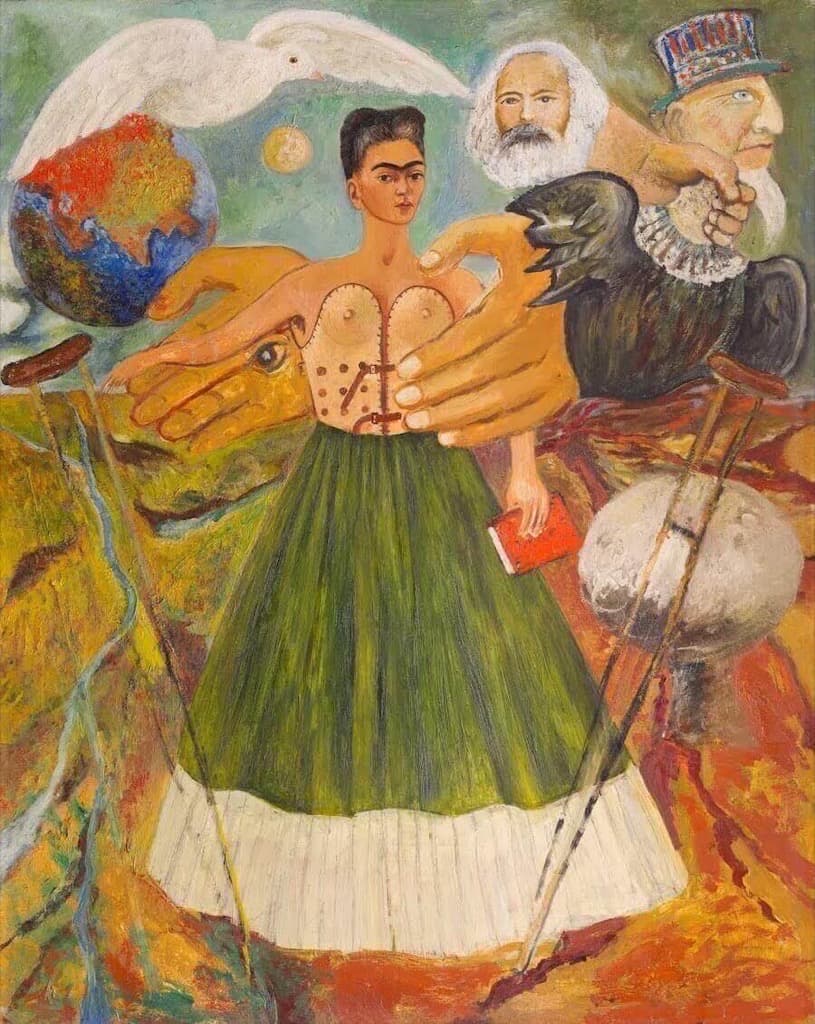
Marxism Will Give Health to the Sick (1954)
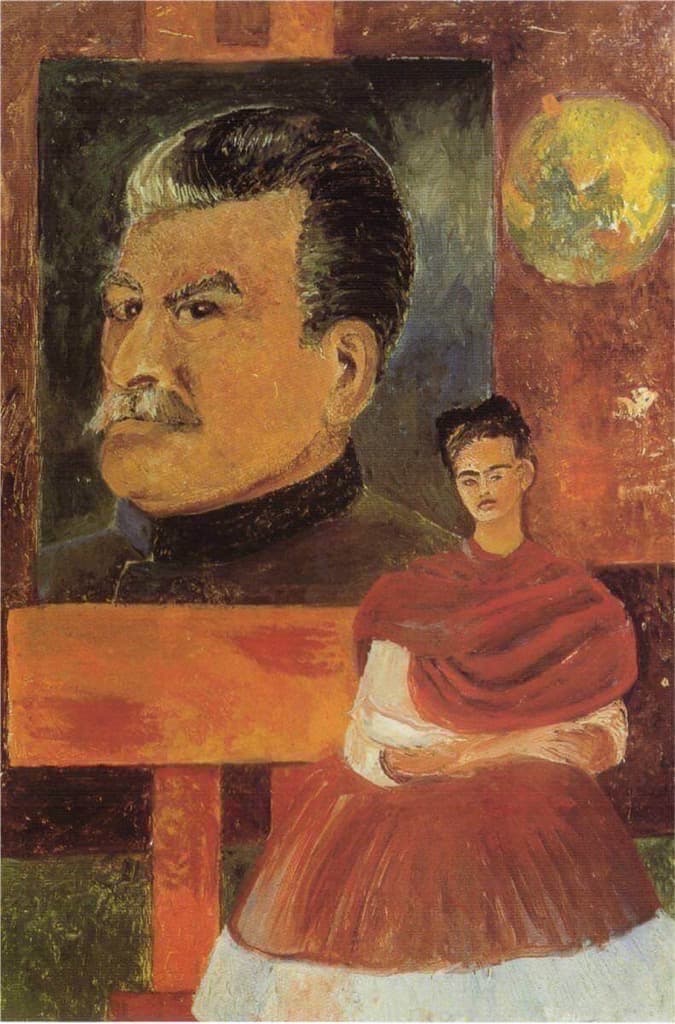
Self Portrait with Stalin (1954)
Marxism Will Give Health to the Sick (1954) & Self Portrait with Stalin (1954): These are some of her final works, painted in Coyoacán. You’ll notice the brushwork is much looser and less precise than her 1930s work (likely due to the heavy painkillers she was taking). The inclusion of political icons like Stalin or the "Hand of Marxism" signals the very end of her life.
How to "Geo-Guess" a Frida Kahlo
To get that perfect score on ArtGuess.io, use this checklist:
- Check the Background: Is it a jungle or a skyscraper?
- Jungle/Vibrant Flora = Mexico City (Coyoacán).
- Factories/Skyscrapers = Detroit or New York.
- Look at the Technique:
- Smooth, velvet-like textures (e.g., Self-portrait in a Velvet Dress) = Her very early work (mid-1920s).
- Hyper-detailed and symbolic = Her prime (1937–1945).
- Blurry or frantic brushstrokes = Her final years (1950s).
- Identify the Companions:
- If she’s with a monkey or a parrot, she’s at home in La Casa Azul.
- If she’s alone on a hospital bed or a pedestal, she’s likely in the USA.
Frida Kahlo didn't just paint pictures; she built a visual language out of her own suffering and heritage. Every time you find her in the game, remember that you aren't just looking at a portrait. You're looking at a woman who survived by turning her pain into a map.
Think you can spot the difference between Frida's Detroit and her Coyoacán?
Play ArtGuess.io Now