 ArtGuess.io
Beyond the Monolith: Mapping the Rhythms of African Modernism
By Bruno, Founder of ArtGuess.io
• 5 min read
In many ArtGuess.io rounds, players often fall into the trap of treating "Africa" as a single aesthetic coordinate. But to truly master the map, you have to look closer. The 20th and 21st centuries saw the continent become a global powerhouse of artistic innovation—not as a single style, but as a vibrant explosion of diverse voices.
From the calligraphy-inspired abstractions of Sudan to the gritty, charcoal-erased memories of South Africa, these artists didn't just paint their surroundings; they redefined what "Modern Art" could be. If you find yourself dropped into a canvas that blends indigenous tradition with avant-garde experimentation, you aren't just looking at African art—you're looking at a specific cultural heartbeat.
The Pioneers: Nigeria and the Khartoum School
Ben Enwonwu (Lagos, Nigeria)
Enwonwu’s work is the definition of "Natural Synthesis"—a term he used to describe the harmonious blending of European technical training with his own Igbo aesthetics. He is unique for his fluid, elongated forms; he famously explained that he elongated figures to represent the aspirations of Nigerians growing into their new independence.
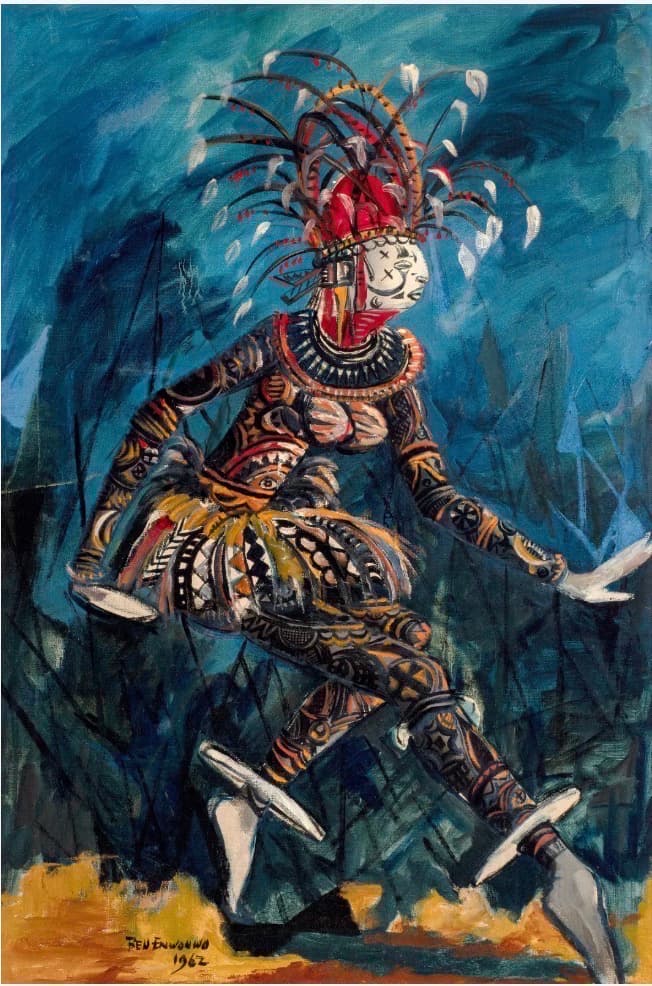
The Dancer (1962)
When you see works like The Dancer (1962), you aren't just looking at a figure—you’re looking at the literal rhythm of a nation finding its footing.
Ibrahim El-Salahi (Khartoum, Sudan)
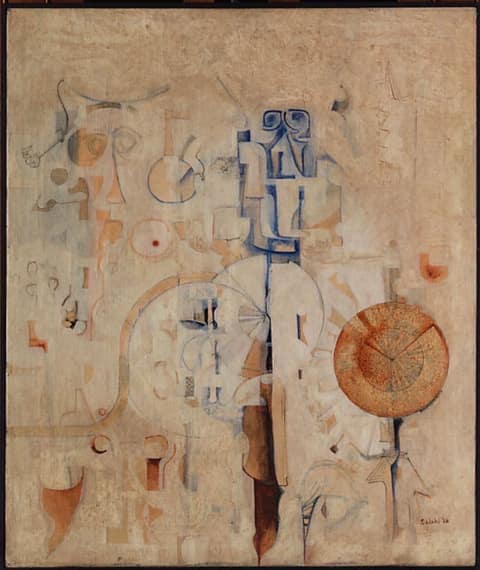
El-Salahi is a meditative genius who essentially invented a new visual language. He was a leader of the Khartoum School, where he pioneered the Hurufiyya movement—taking the sweeping curves of Arabic calligraphy and deconstructing them into abstract, human-like shapes.
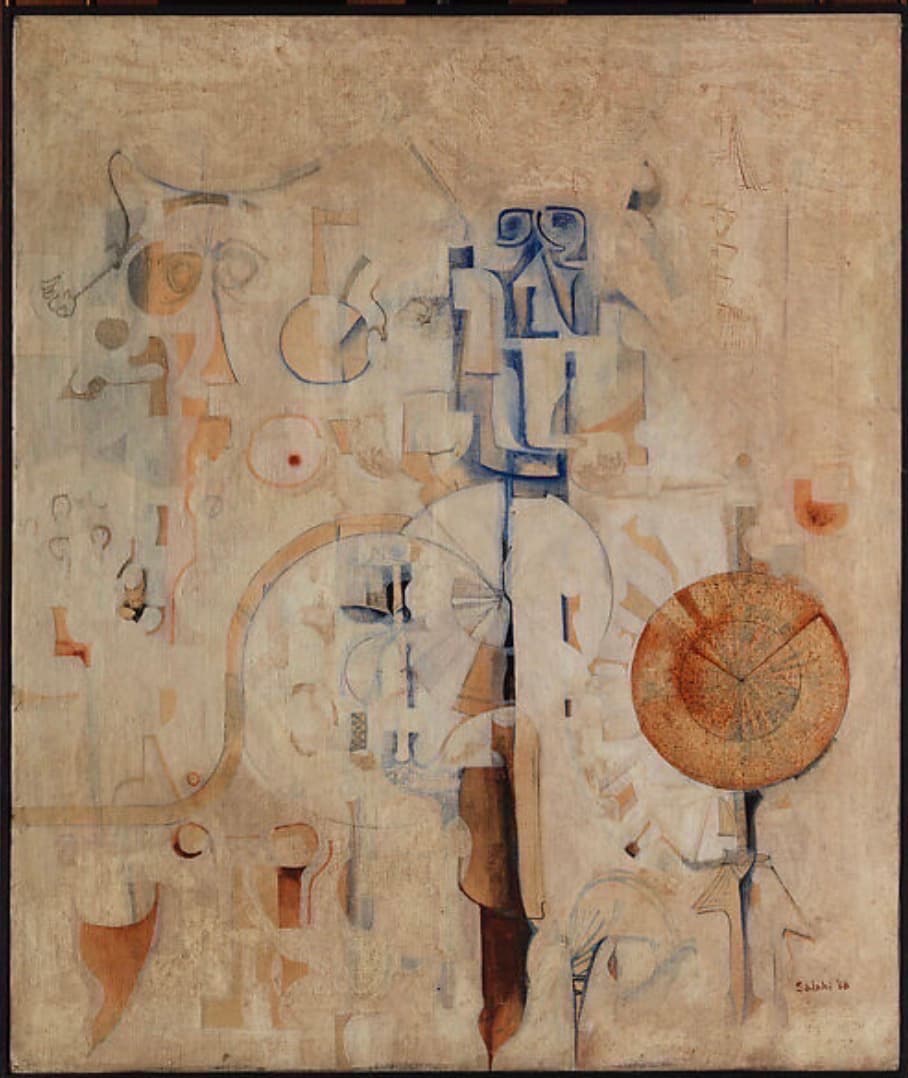
Alphabet No. 2 (1962)
His style is unique for its "earthy" spiritualism; works like Alphabet No. 2 (1962) often use a palette of bone-whites and desert-browns, making his surrealism feel ancient and modern at the same time.
The Social Commentators: Kinshasa and Nairobi
Chéri Samba (Kinshasa, Democratic Republic of Congo)
Samba is the face of "Popular Painting" in Kinshasa. He began his career as a billboard painter and comic strip artist, which explains his vibrant, non-naive style. He is unique because he breaks the "fourth wall" of art, often painting himself into the scene and using speech bubbles or text to comment on global politics and human behavior.
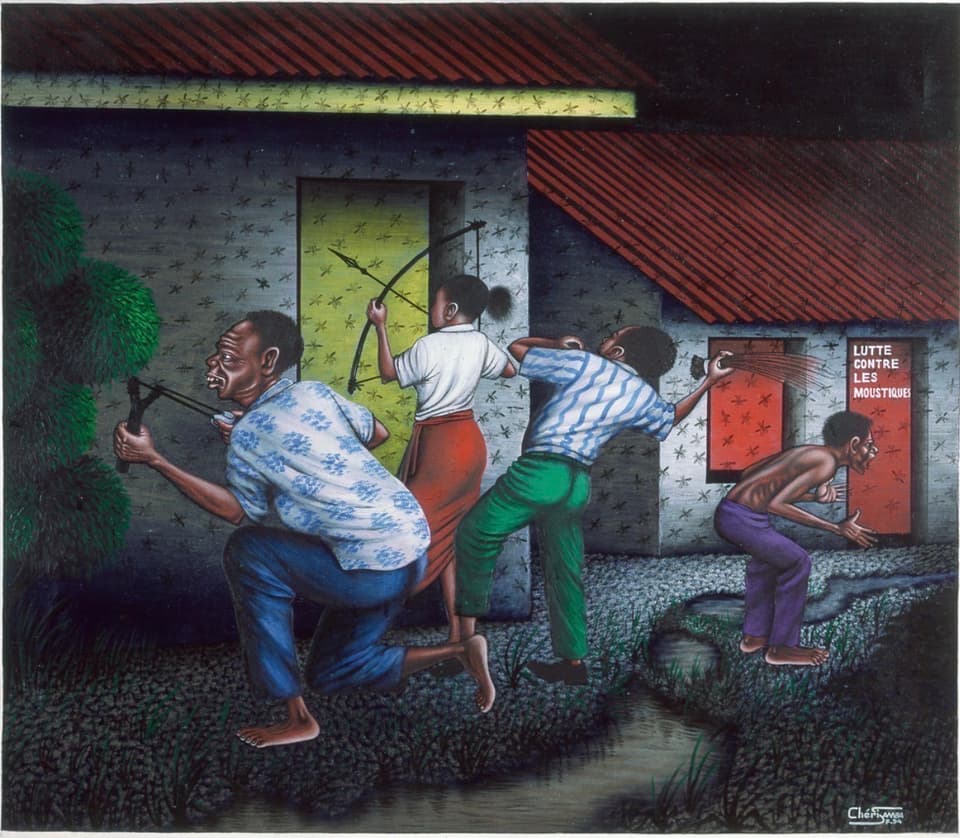
La chasse aux moustiques (1999)
In La chasse aux moustiques (1999), his use of hyper-bright acrylics and social satire makes his work instantly recognizable—if it looks like a high-art billboard with a message, it’s Samba.
Michael Armitage (Nairobi, Kenya)
Armitage is a master of "Material Geography." He is unique because he doesn't paint on traditional canvas; instead, he uses Lubugo, a traditional bark cloth from Uganda. This material is coarse and full of holes, which Armitage incorporates into his compositions.
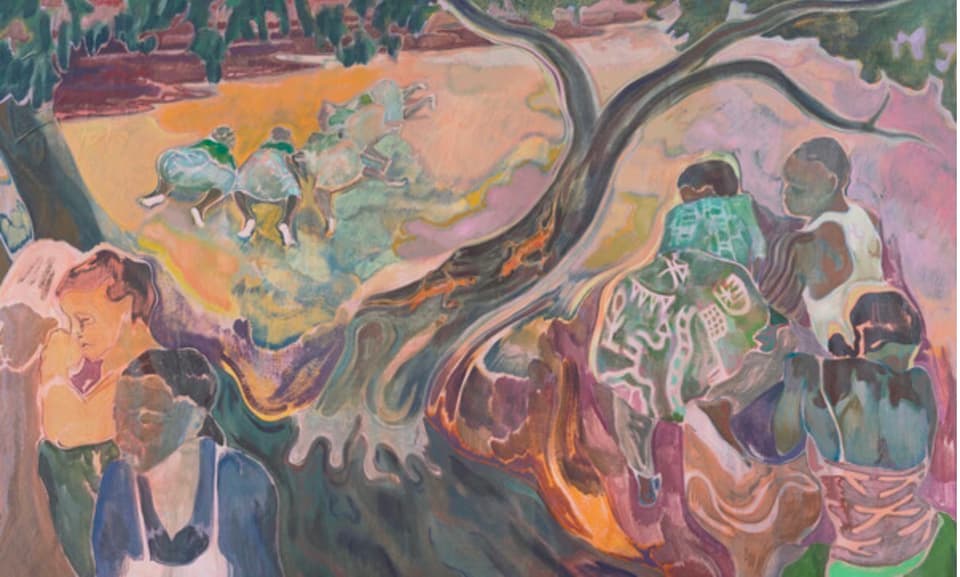
Nasema Nawe (2016)
His style blends a soft, "dream-like" wash of oil paint with gritty political reality. In Nasema Nawe (2016), the way the paint sits on the textured bark creates a sense of history that feels literally "ingrained" in the land.
The Industrial and the Natural: Johannesburg and the Poto-Poto School
William Kentridge (Johannesburg, South Africa)
Kentridge’s work is inseparable from the landscape of post-apartheid South Africa. He is world-renowned for his "erasure" technique: he draws a scene in charcoal, erases part of it, and draws over it, leaving a ghostly smudge behind. This makes his style unique because it visually represents memory and history—nothing is ever truly gone.
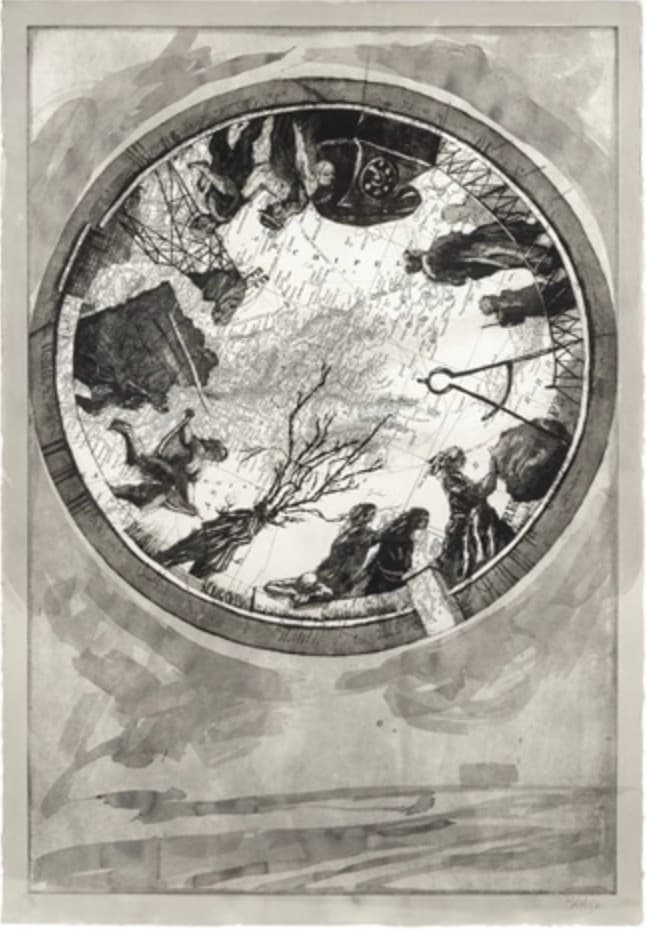
Atlas Procession I (2000)
Works like Atlas Procession I (2000) use a monochromatic, industrial palette that mirrors the mines and the "scars" of Johannesburg’s geography.
Wilhelm Kuhnert (Rufiji River, Tanzania)
Though German by birth, Kuhnert’s artistic soul belonged to the East African savannah. He was a pioneer of Wildlife Realism, being one of the first artists to sketch animals in their actual habitats rather than in zoos. His uniqueness lies in his anatomical precision; he was as much a naturalist as he was a painter.
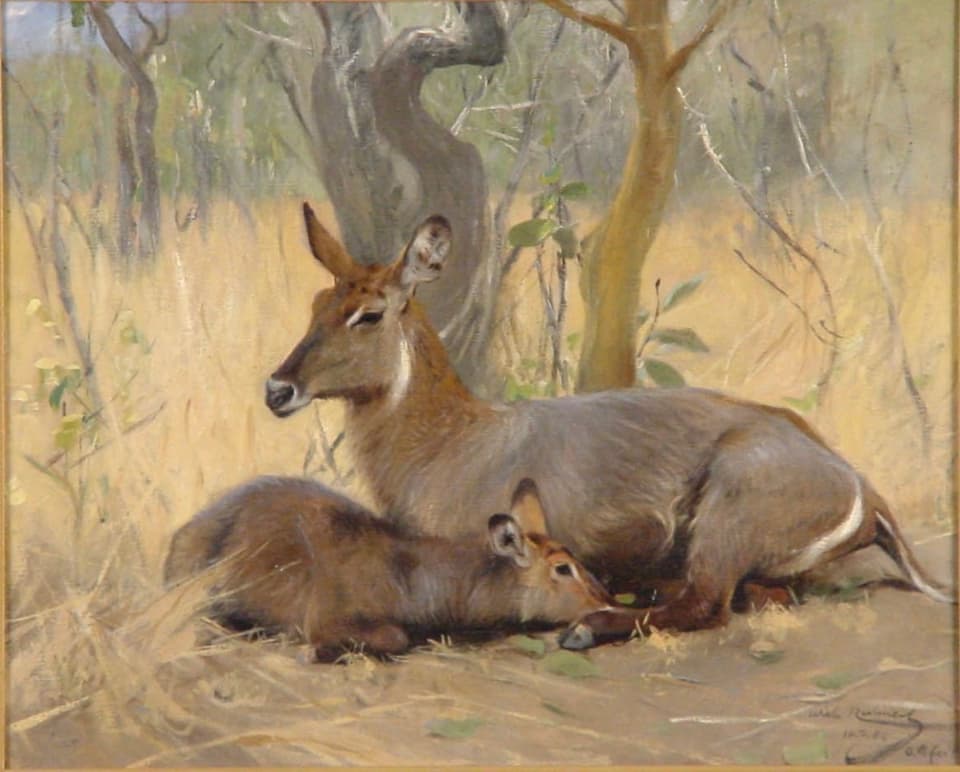
Waterbucks (1905)
When you encounter Waterbucks (1905), notice the quality of the light—he captures the specific, golden atmosphere of the African interior with a clarity that few others achieved at the turn of the century.
Jacques Zigoma (Brazzaville, Republic of Congo)
Zigoma was a standout figure of the Poto-Poto School in Brazzaville, a movement that encouraged a distinct, rhythmic style of African painting. His work is unique for its vibrant, stylized figuration—often referred to as "Mickey Mouse" style by some critics due to the rounded, simplified limbs of his figures, though Zigoma infused them with a modernist, surrealist energy.
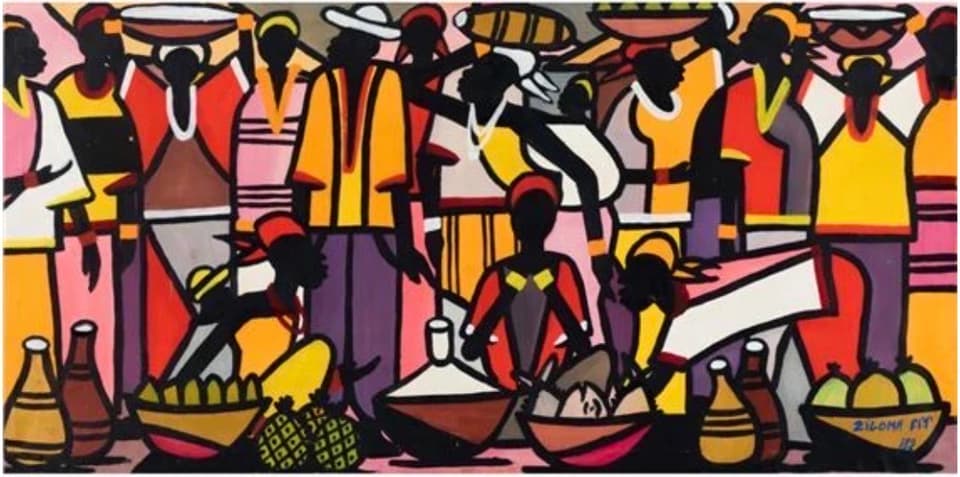
Scène de marché (1982)
In Scène de marché (1982), his use of gouache creates a flat but energetic sense of space that captures the bustling, community-driven spirit of the Congo.
How to "Geo-Guess" the Details
- The "Bark" Factor: If the texture of the painting looks like tree skin, it's Michael Armitage (Nairobi).
- The "Calligraphy" Curve: If the lines look like letters that have turned into people, it's El-Salahi (Sudan).
- The "Ghostly Smudge": If you see charcoal dust and erased lines, it's Kentridge (South Africa).
- The "Social Billboard": If there's text and bright, flat colors, it's Chéri Samba (DRC).
Ready to master the map?
Play ArtGuess.io Now